Rare ceremonial matcha by Tsujirihei Honten, available outside Japan for the first time. Chiyo Mukashi, meaning a thousand generations, captures Kyoto's centuries-old tea heritage. Delicate floral aroma, silky texture, and a soft, lingering finish with timeless charm.
Tsujirihei Honten · Est. 1860 · Traditionally Shaded · Floral & Graceful · Maison Koko Exclusive · First Release Outside Japan
Description
千代昔 — Chiyo Mukashi. In Japanese, chiyo (千代) means a thousand generations, a phrase used for centuries to honour what has been passed down and carried forward. Mukashi (昔) is a traditional designation in tea naming, marking this as koicha-grade tea, made the old way, exactly as it always has been. Together, the name is a quiet tribute to continuity itself.
Chiyo Mukashi captures the refined essence of Kyoto's thousand-year-old tea culture. Crafted from Ujihikari and Samidori, it opens with delicate floral aromas before leading into a silky texture and gentle umami that unfold gracefully, not arriving all at once, but emerging in sequence, like chapters in a long and careful story.
Producer Tsujirihei Honten Est. 1860, Uji, Kyoto
Cultivars Ujihikari & Samidori Uji, Kyoto heritage cultivars
Availability Rare & limited First release outside Japan
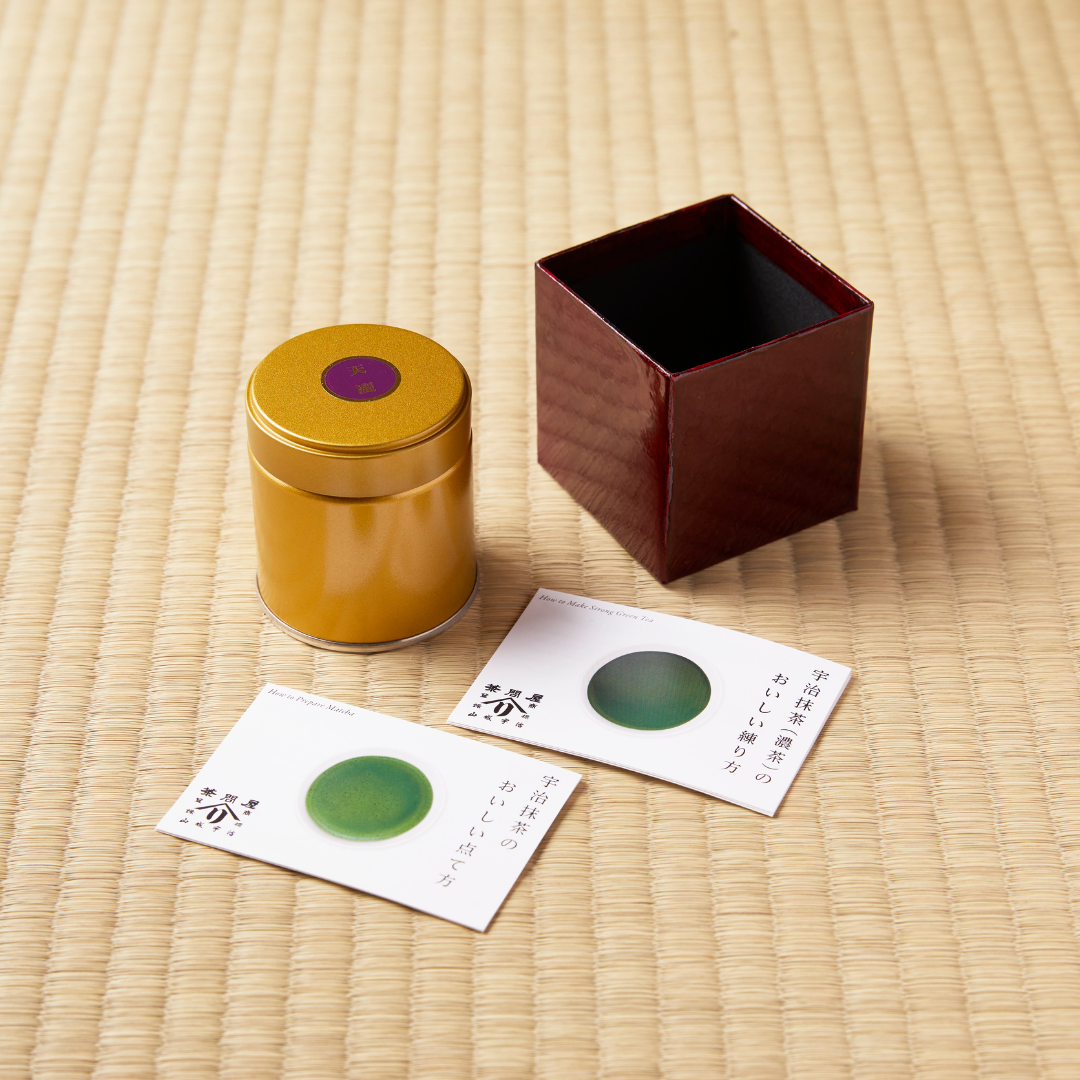
The elegant Tsujirihei Honten tin is part of what makes this matcha a gift in itself, a piece of Uji craftsmanship to keep long after the last spoonful.
-
Origin: Uji, Kyoto, Japan
-
Cultivars: Ujihikari & Samidori
-
Shading: Honzu (本簀) — traditional reed and straw canopy
-
Net: weight: 20g — presented in an elegant Tsujirihei Honten tin
-
Style: Floral, silky, gracefully unfolding
-
Finish: Soft, lingering, and quietly memorable
*Tasting notes and colour descriptions reflect general sensory perception and data provided by our supplier, and may vary by individual preference, preparation method, and seasonal batch. We do our best to describe each product as accurately as possible.
Why This Matcha?
Chiyo Mukashi takes its name from a phrase that has, for centuries, been used to honour continuity, the idea that what is good is made better not in a single moment, but across a thousand generations of careful attention. It is a fitting name for a matcha grown in Uji, where tea cultivation has been refined for over 800 years.
THE TWO OCULTIVARS AND WHAT THEY BRING
Ujihikari for floral elegance and Uji identity
Developed in Uji itself, Ujihikari is known for its exceptional refinement and delicate floral character. It is the cultivar that gives Chiyo Mukashi its opening note, the first, gentle introduction to everything that follows.
Samidori for silkiness and gentle umami
Samidori contributes the silky texture and gentle umami that unfolds gracefully after the initial floral notes, a smooth, natural sweetness that lingers softly rather than asserting itself. Together with Ujihikari, it creates a matcha that feels like a single, continuous gesture rather than separate notes.
Honzu (本簀), 16th century shading
All three cultivars are grown under honzu shading, reed screens and rice straw that filter sunlight naturally, deepening colour, intensifying sweetness, and producing the long, layered umami that defines this matcha's character.
Strictly limited availability
Tsujirihei Honten produces in small quantities by design, quality over volume, always. Once this allocation is sold, availability cannot be guaranteed.
Tsujirihei Honten
Tsujirihei Honten was founded in 1860 in Uji, Kyoto, the region that has defined Japanese matcha for over six centuries. For more than 160 years, the house has dedicated itself exclusively to authentic Uji tea, sold only at their own boutiques in Japan until now.
Their tea gardens use honzu (本簀) shading, the oldest, most labour-intensive method in Japanese cultivation, used by fewer than ten farms today, and their tencha is stone-milled in a century-old factory to preserve colour, aroma, and flavour. This exclusive release through Maison Koko marks the first time their range has reached an international audience, in strictly limited quantities.
Ingredients
Ceremonial-grade green tea fine powder (Ujihikari & Samidori cultivars, Uji, Kyoto)
Character
-
Thickness: Silky and smooth, light but composed
-
Sweetness: Gentle and graceful, emerging after the floral opening
-
Umami: Gentle and unfolding, never assertive
-
Aroma: Delicate and floral; the first impression, softly given
-
Finish: Soft, lingering, and quietly memorable
-
Astringency: Very low, smooth throughout
Origin
Uji, Kyoto, Japan