
Best Matcha for Latte Art (2026): Top Powders and Why Yours Looks Dull
Share
- Best overall for latte art — Gold Award: vivid jade-green, ultra-smooth in any milk, ceremonial grade.
- Best colour vibrancy — Okumidori Cultivar: neon green that holds intensity even in full-cream milk, ideal for photography.
- Best for iced matcha lattes — Tsuyuhikari Cultivar: naturally sweet, zero bitterness, silky fine grind.
- Best organic option — Saemidori Cultivar: certified organic, creamy texture, exceptional cold with oat milk.
- Key technique rule — Use water at 70–75°C for your paste and always sift first. These two steps fix 90% of dull or chalky results.
All picks: fresh, stone-ground, ceremonial grade, shade-grown Japanese plants. Restocked weekly via DHL Express from Japan.
If your matcha latte never quite looks or tastes like the ones at your favourite cafe, you are not alone. Dull green colour, chalky texture, and flat froth are the three most common complaints from home matcha drinkers, and almost all of them trace back to two things: the wrong powder and the wrong water temperature.
This guide covers the best matcha powders for latte art in 2026, the exact reasons your matcha might be falling short, which milk to use, and the step-by-step technique that produces a vibrant, smooth cup every time.
What Makes Matcha Good for Latte Art
Not all matcha behaves the same way in milk. The differences in grind, cultivar, freshness, and flavour profile determine whether you get a vibrant, smooth latte or a chalky, dull one. Here is what actually matters.
Why Grind Fineness Is Critical for Matcha Latte Art Quality
The best matcha for latte art is ground to around 5 to 10 microns. A finer grind means the powder disperses fully in warm water and integrates seamlessly with milk rather than settling at the bottom or creating a gritty texture. Stone-ground ceremonial grade matcha achieves this consistently. Culinary grade matcha, which is coarser and more oxidised, will never produce the same result regardless of how vigorously you whisk it.
Why Matcha Cultivar Determines Latte Colour and Vibrancy
Matcha colour comes from chlorophyll, preserved through overhead shading of the tea plant in the final 20 to 40 days before harvest. Cultivars like Okumidori, Tsuyuhikari, and Samidori are specifically known for producing a vivid, deep green that holds up beautifully against steamed milk. Dull, yellowish matcha has either been poorly shaded, harvested too late, or degraded from age and improper storage. No technique can restore colour that was never there.
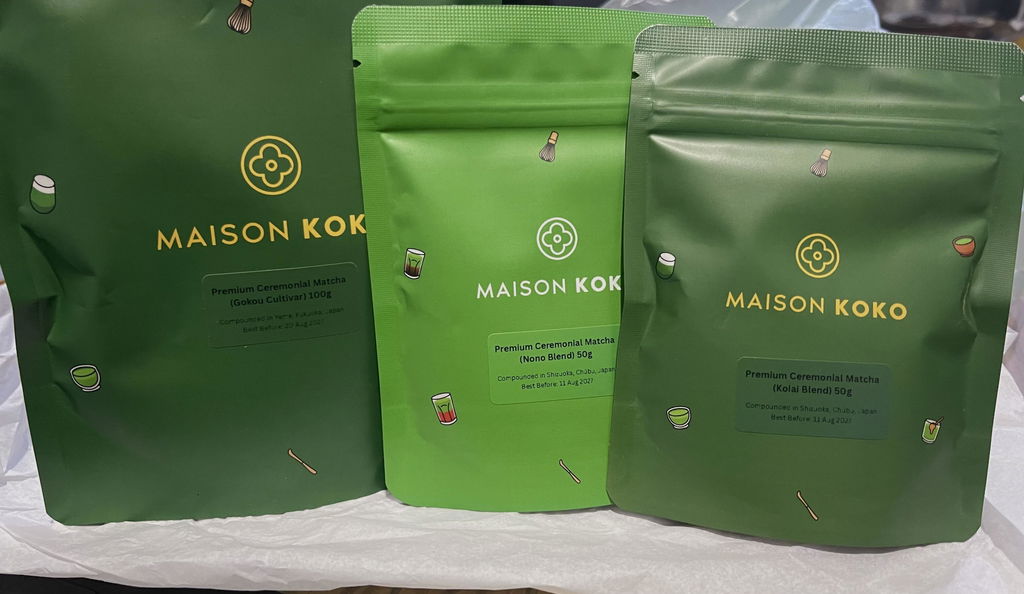
Open the tin and look. Fresh ceremonial matcha is almost neon green and smells grassy and umami-forward. Stale matcha looks yellow-green or olive and smells flat or faintly musty. If in doubt, that is your answer. Maison Koko guarantees no matcha older than 3 months from harvest, restocked weekly via DHL Express air freight from Japan.
Best Matcha Powders for Latte Art in 2026
Every product below is ceremonial grade, stone-ground, and sourced directly from Japan. All have been selected specifically for their performance in milk-based drinks.
For a complete guide to the full Maison Koko range beyond latte-specific picks, including blends, single-cultivar expressions, and how to navigate by flavour profile, see the Maison Koko matcha buyer's guide.
The Gold Award is the most consistently praised matcha in the Maison Koko range for lattes. It has a smooth, creamy profile with exceptional natural sweetness, almost no bitterness, and a vivid jade-green colour that photographs beautifully. Customers describe it as "incredibly smooth with a beautiful nutty depth" and note that it froths seamlessly with oat milk.
It is the best all-rounder in the range — equally impressive in a daily iced oat milk latte and in a ceremonially prepared hot bowl. If you are picking one matcha for latte art and straight drinking, this is it.
Okumidori is one of Japan's most sought-after matcha cultivars, prized specifically for its exceptional colour vibrancy and ultra-fine grind. The colour is a deep, almost electric neon green that holds its intensity even in a latte with full-cream milk. If colour is your priority for latte art or photography, this is the one.
The flavour has a gentle sweetness with deep umami that comes through even in milk preparations. More complex than the Gold Award, with a slightly more robust character that suits those who want to taste the tea through the milk.
Tsuyuhikari produces some of the most naturally sweet and aromatic matcha available anywhere. The powder is silky fine, it dissolves completely in warm water, and creates a smooth paste that integrates seamlessly with cold or steamed milk. Customers describe it as refreshing and smooth with zero bitterness — an exceptional choice for iced matcha lattes with oat or almond milk.
The high L-theanine content of Tsuyuhikari produces a naturally sweet, light character that needs no added sugar — even in a cold preparation. Beloved by Japanese tea masters for traditional preparation, it is equally at home in a modern iced latte.
For those who require certified organic, the Saemidori Cultivar delivers all the vivid brightness and natural sweetness the cultivar is known for, with full organic certification. Its creamy texture makes it particularly exceptional with cold oat milk. Customers consistently describe it as smooth and satisfying with no bitterness.
If you are making multiple lattes a day and want something specifically designed for milk-based drinks, the Latte Blend is formulated to balance perfectly with oat, almond, and full-cream milk. Smooth, accessible, and consistent — it produces the same excellent result every time without the complexity of a single-cultivar expression.
Founded in 1860 in Uji, Kyoto. When you want to experience what the world's finest heritage matcha tastes like in a latte — complex, layered, and unlike anything else — the Kamo Mukashi and Manyo no Mukashi stand up to milk with a depth that has to be tasted to be understood.
Why Your Matcha Latte Looks Dull (and How to Fix It)
Most matcha latte problems come down to a handful of mistakes that are easy to fix once you know what they are.
Which Milk Works Best for Matcha Latte Art
The choice of milk is as important as the choice of matcha for latte art. Different milks produce dramatically different microfoam quality, and some simply do not work for detailed patterns.
The milk rules change for iced matcha. Any oat milk works well when poured cold, and the microfoam requirement disappears. For iced matcha, the Tsuyuhikari and Saemidori cultivars are the strongest performers — their natural sweetness is particularly pronounced in cold preparations and they do not need added sugar.
How to Make a Matcha Latte with Great Colour and Texture
Follow these steps and the results will be consistent every time. The paste preparation is the step most people skip or rush, and it is the most important.
4g ceremonial grade matcha (sifted), 25g water at 70-75 degrees Celsius, 150g barista oat milk or full-cream milk, bamboo whisk or electric milk frother.
- 1Sift 4g of matcha into your bowl or cup. Do not skip this step even with high-quality matcha.
- 2Add 25g of water at 70 to 75 degrees Celsius. Not boiling — boiling water destroys chlorophyll and amplifies bitterness.
- 3Whisk in a firm zigzag or W pattern for 30 to 45 seconds until you have a smooth, frothy paste with no visible powder or clumps and a light foam on the surface.
- 4Steam your milk to 60 to 65 degrees Celsius, stretching it just below the surface to create fine velvety microfoam, then submerging the tip to spin and integrate.
- 5Pour the steamed milk slowly over the matcha paste, holding the pitcher close to the surface of the matcha. Hold back foam with a spoon initially, then release at the end to create latte art.
For iced matcha lattes, prepare the paste with warm water exactly the same way, then pour over ice and cold milk. The warm paste step is critical even for iced drinks — cold water will not dissolve the powder properly regardless of how long you whisk.
Ceremonial vs Culinary Grade: Does It Matter for Lattes?
Yes — and significantly more than most people realise. The grade of matcha determines grind fineness, colour vibrancy, flavour profile, and how the powder behaves in milk. These are not marginal differences.
Swipe to see all columns →
| Grade | Grind | Colour | Flavour | In milk | For latte art |
|---|---|---|---|---|---|
| Ceremonial | Ultra-fine 5-10 microns | Vivid neon green | Sweet, umami, no bitterness | Fully dissolves, even colour | Excellent |
| Premium culinary | Fine | Bright green | Slightly more bitter | Mostly dissolves | Acceptable |
| Culinary | Coarser | Dull green or yellow-green | Bitter, flat, grassy | Settles, uneven colour | Not suitable |
The colour difference alone is visible immediately. Open a tin of quality ceremonial matcha next to culinary grade and the gap is unmistakable — one is almost luminous, the other is dull. That colour difference shows up in your glass. For latte art where the green has to show through steamed milk, ceremonial grade is the only option that works.
Best Matcha for Latte Art: Our Verdict
The best matcha for latte art is fresh, ceremonial grade, stone-ground powder from shade-grown Japanese plants. Gold Award for the best all-rounder. Okumidori Cultivar if colour is your priority. Tsuyuhikari for iced lattes and anyone who wants zero bitterness.
If your matcha lattes have been disappointing, start with your water temperature. Switch from room temperature to 70 to 75 degrees Celsius for your paste and sift every single time. Those two changes alone will transform your results before you even think about upgrading your powder.
And if you want to experience what a genuinely extraordinary matcha tastes like in a latte — complex, layered, and unlike anything from a cafe — the Tsujirihei Honten collection is worth trying at least once.
Shop the Full Matcha RangeFrequently Asked Questions