
What Is Blue Butterfly Pea? The Colour-Changing Flower Explained
Share
Blue butterfly pea is the vivid blue flower of the Clitoria ternatea plant, native to tropical Southeast Asia. Its petals release a deep natural blue in water, and that colour shifts to purple and pink when you add something acidic like lemon.
- It is caffeine free, because it comes from a flower, not the tea plant.
- The colour change is real chemistry: natural pigments called anthocyanins act as a pH indicator.
- The flavour is mild, earthy, and slightly woody, so it colours drinks without taking over.
The most striking thing about it is the colour change. Here's exactly why it happens.
If you have ever watched a drink shift from deep blue to purple to pink the moment someone squeezes in a slice of lemon, you have already met blue butterfly pea. It is one of the most visually striking natural ingredients in modern drinks, and one of the most misunderstood.
This guide explains exactly what blue butterfly pea is, why it changes colour, what it tastes like, and how to use the powder, in plain language, with the science kept honest and simple.
Blue butterfly pea is the flower of Clitoria ternatea, a flowering vine native to tropical Southeast Asia. The plant goes by several names, including blue pea, Asian pigeonwings, and simply blue tea flower. Its petals are an intense, almost electric blue, and that colour has made the flower a prized natural dye and drink ingredient for centuries across Thailand, Vietnam, Malaysia, and Indonesia.
Brewed as a tea, the dried flowers release a deep indigo-blue infusion. In powder form, blue butterfly pea becomes a fast, convenient way to bring that same natural blue to lattes, iced drinks, lemonades, mocktails, and desserts, without artificial colouring. A small amount dissolved in water or milk produces a vivid blue base you can build a drink around.
Blue butterfly pea is a naturally blue flower used as a caffeine-free tea and a natural colouring that famously changes colour with acidity.
This is the part that makes butterfly pea genuinely special, and it is real chemistry, not a gimmick.
Butterfly pea petals contain natural pigments called anthocyanins, the same family of pigments that colour blueberries and red cabbage. Anthocyanins are pH-sensitive, which means they change colour depending on how acidic or alkaline their surroundings are. In other words, butterfly pea is a natural pH indicator, the same principle used in a school chemistry lab, just far more beautiful.
So when a bartender or barista adds citrus to a blue butterfly pea drink and it blooms into purple and pink in front of you, what you are seeing is the anthocyanins responding to the drop in pH. Add hibiscus, which is also acidic, and the colour can push all the way to red. This is why butterfly pea is the star of so-called mood-ring cocktails and colour-changing lemonades.
Worth knowing: butterfly pea flower extract is well established as a natural colouring. In 2021 the US Food and Drug Administration approved butterfly pea flower extract as a colour additive exempt from certification for use in certain foods and beverages, part of why you now see it in everything from craft drinks to ice cream.
Yes. This is one of the most common questions, and the answer is simple. Butterfly pea comes from a flower, not from Camellia sinensis, the plant that gives us black, green, white, oolong, and matcha. Because it contains no true tea leaf, blue butterfly pea is naturally caffeine free.
That makes it an easy choice for any time of day, including the evening, and a natural pick when you want the drama of a colour-changing drink without any caffeine. It is also why butterfly pea is popular for family-friendly drinks and gatherings, everyone can enjoy the colour-change trick.
Gentler than its dramatic colour suggests. Butterfly pea has a mild, earthy, slightly woody flavour, often compared to a light green tea but without the grassy bitterness. It is subtle and clean rather than strong or floral-perfumed.
That mildness is exactly why it works so well as a natural colour. Because the flavour stays in the background, butterfly pea lets you create a vividly blue or purple drink without changing the taste much, which is why it pairs so easily with citrus, honey, coconut, and milk-based drinks. In most recipes, it is doing the visual work while another ingredient carries the flavour.
These two get confused constantly because both produce a vivid blue, but they are completely different ingredients, and there is one easy way to tell them apart.
| Feature | Blue Butterfly Pea | Blue Spirulina |
|---|---|---|
| Source | A flower (Clitoria ternatea) | An extract from algae |
| Changes colour with acid? | Yes, blue to purple to pink | No, stays blue |
| Flavour | Mild, earthy, woody | Very mild, slightly oceanic |
| Caffeine | Caffeine free | Caffeine free |
| Best known for | Colour-changing drinks | Steady vivid blue colour |
Add lemon. If the blue turns purple, it is butterfly pea. If it stays blue, it is blue spirulina. The pH colour change is the single clearest way to tell the two apart.
This is one of the most common points of confusion, so it is worth stating plainly: "blue matcha" is not matcha at all. Real matcha is made from shade-grown green tea leaves and is always green. The product sold as "blue matcha" is simply blue butterfly pea powder under a catchier name.
The two could not be more different. Genuine matcha is ground green tea, it is green, it contains caffeine, and it has a rich, umami flavour. Blue butterfly pea is a flower, it is blue, it is caffeine free, and its flavour is mild and earthy. They share nothing except a powdered form and a place on trendy drinks menus.
The name caught on because butterfly pea is used the same way matcha often is, whisked into lattes and iced drinks, so calling it "blue matcha" was an easy shorthand. But if you are specifically looking for the green tea, antioxidant-rich drink, that is matcha. If you want the caffeine-free, colour-changing blue flower, that is butterfly pea. Knowing the difference saves disappointment on both sides.
Powder is the most versatile form, faster than steeping flowers and easy to control. The basic method is simple.
For the cleanest, most vivid colour, use warm rather than boiling liquid to dissolve the powder, and add any acidic ingredients last so you control the colour change rather than locking it in early.
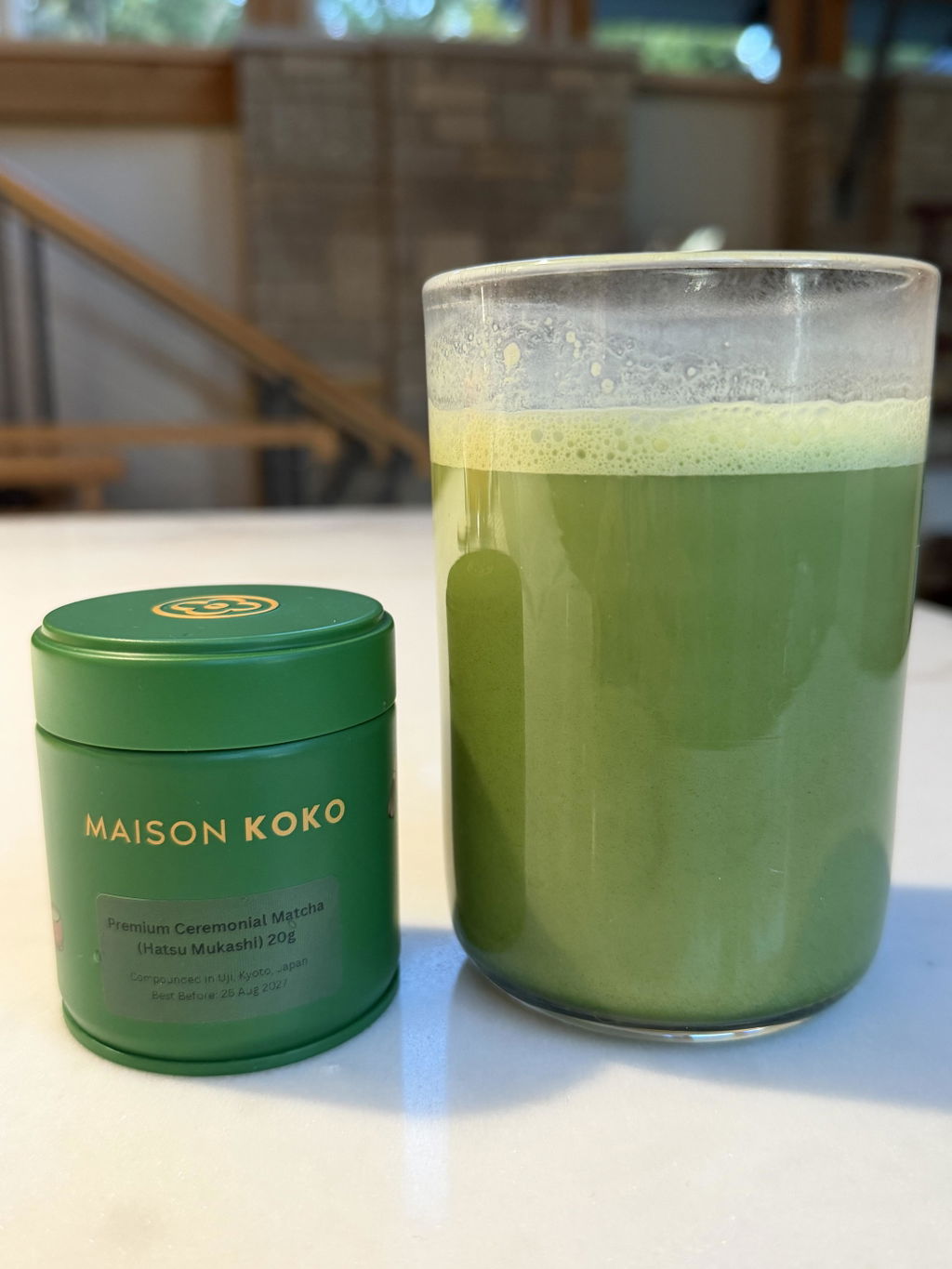
Blue butterfly pea is a natural partner for other vivid powders, because its job is colour and its flavour stays out of the way. Layered with the green of matcha, it makes a striking two-tone drink. Alongside the violet of ube, it extends a whole palette of natural, photogenic colours for a drinks menu or a creative latte at home.
The appeal is the same in every case: real, plant-based colour with a clean, mild taste, so the drink looks extraordinary without tasting artificial.
Try our Premium Blue Butterfly Pea Powder for vivid, colour-changing drinks, and browse our full range of specialty powders, including ube, plus our matcha range for the green layer. New to ube? See our guide to ube vs taro.
From deep blue to purple to pink, blue butterfly pea turns an ordinary drink into a moment. Maison Koko's Premium Blue Butterfly Pea Powder gives you that natural, colour-changing magic at home, no artificial dye required.
Shop Blue Butterfly Pea Powder