
Ube vs Taro: What's the Difference? (Taste, Colour & Uses)
Share
No, they are different plants. Ube is a purple yam with vivid violet flesh and a sweet, vanilla-like, nutty flavour, popular in Filipino desserts. Taro is a starchier root with much paler flesh, usually off-white to faint lilac, and a milder, more neutral taste.
The biggest source of confusion: real taro is not actually purple. Most vivid-purple "taro" drinks get their colour from added colouring or from ube. Here's why.
Ube and taro are two of the most loved, and most confused, ingredients in Asian desserts and drinks. Both turn up in bubble tea, ice cream, and pastries. Both are root-based. And thanks to a sea of purple lattes and swirled desserts, most people assume they are the same thing, or at least interchangeable.
They are not. Ube and taro are different plants with different flavours, different textures, and, crucially, different natural colours. This guide clears up the confusion for good, including the single biggest myth: that taro is purple.
Ube (pronounced OO-beh) is a purple yam native to the Philippines, where it is a beloved dessert ingredient. Its defining feature is its colour: a genuinely vivid, natural violet flesh. The flavour is sweet and mild, frequently described as nutty with notes of vanilla and a subtle earthiness. Ube is most at home in sweets, from the classic Filipino ube halaya to ice cream, cakes, and increasingly, drinks.
Taro is a starchy root vegetable grown across Asia, Africa, and the Pacific, and used for thousands of years. Unlike ube, its flesh is pale, off-white to a faint lilac, often flecked with purple-grey specks. Its flavour is mild, starchy, and gently nutty, closer to a subtly sweet potato. Taro is genuinely versatile, appearing in both savoury dishes and sweet preparations like bubble tea.
Ube is a sweet purple yam used mostly in desserts. Taro is a starchy pale root used in both sweet and savoury cooking. They are not the same plant, and they are not naturally the same colour.
- Colour: naturally vivid violet
- Flavour: sweet, nutty, vanilla-like
- Texture: soft, smooth, creamy when cooked
- Best in: desserts, ice cream, sweet drinks
- Origin: Philippines
- Colour: pale, off-white to faint lilac
- Flavour: mild, starchy, subtly sweet
- Texture: firm, potato-like, creamy when cooked
- Best in: savoury dishes and sweet drinks
- Origin: across Asia, Africa, the Pacific
| Feature | Ube | Taro |
|---|---|---|
| Plant type | Purple yam | Starchy root (corm) |
| Natural colour | Vivid violet | Pale white to faint lilac |
| Flavour | Sweet, nutty, vanilla-like | Mild, starchy, subtly sweet |
| Sweetness | Higher, naturally sweet | Lower, more neutral |
| Typical use | Mostly desserts and sweet drinks | Both savoury and sweet |
| In bubble tea | Vivid colour, sweet aroma | Creamy body, mild taste, often coloured |
This is the part almost everyone gets wrong, and it explains most of the ube-taro confusion in one go.
When you picture taro, you probably picture purple, a taro bubble tea, a taro latte, a lavender-coloured swirl. But real taro flesh is not vivid purple. It is pale, off-white to a faint greyish lilac at most, sometimes with darker specks. The deep, photogenic purple most people associate with taro is largely a visual expectation, created by products that are either dyed or made with ube.
Ube, by contrast, really is that purple, naturally. So when you see a strikingly violet dessert or drink, the honest truth is that its colour is more likely thanks to ube or added colouring than to taro alone. This is the single most useful thing to understand about these two ingredients, and the thing that clears up nearly every mix-up between them.
Ube leads with sweetness and aroma. Its flavour is gentle and dessert-friendly, with that distinctive vanilla-nutty quality and a hint of earthiness. When cooked and mashed, it becomes soft, smooth, and creamy, which is why it works so beautifully in ice cream, jams, and cake.
Taro is more reserved. It is starchier and more potato-like, mild and only subtly sweet on its own, which is exactly what makes it versatile. That neutrality lets it move between savoury dishes and sweet drinks, where its sweetness is usually boosted. Cooked taro turns creamy and tender, giving bubble tea its signature smooth body.
If ube is the showy, sweet, aromatic one, taro is the quiet, creamy, adaptable one. Neither is better, they simply do different jobs.
Ube shines in sweets. Filipino cuisine built an entire dessert tradition around it, ube halaya (a sweet jam), ube ice cream, ube cakes and pastries, and increasingly ube lattes and drinks where its colour and sweet aroma carry the whole experience. Our Premium Ube Powder brings that signature violet colour and gentle sweetness to lattes and desserts at home.
Taro spans the menu. In savoury cooking it is steamed, fried, or simmered into stews and chips. In sweet form it is the classic bubble tea flavour, taro buns, and taro desserts, usually with added sweetness and, often, a little help on the colour front. If you want that creamy, nutty-sweet taro latte at home, our Taro Latte Mix makes it in seconds.
The overlap, bubble tea and desserts, is exactly where the two get muddled. Now you know how to tell which is doing the work: if it is vividly purple and distinctly sweet-aromatic, that is ube; if it is paler, creamier, and milder, that is taro.
One of the most striking pairings to emerge in cafe culture is ube with matcha. The appeal is immediate and visual: ube's natural violet against matcha's vivid green makes a layered drink that is genuinely beautiful, and the flavours complement rather than compete. Ube's sweet, vanilla-like character softens matcha's earthy, umami depth, while good matcha keeps the drink from tipping into pure dessert.
It is a pairing built for both the eye and the palate, which is exactly why ube matcha has become such a popular order. If you want to recreate it at home, the key is using a matcha bright and bold enough to hold its own next to ube's sweetness, a quality latte-friendly grade rather than a dull culinary powder.
Browse our specialty powders, including ube, and our matcha range for the green layer. New to choosing matcha? Our complete Matcha Buyer's Guide maps the whole range by flavour, and our best milk for matcha lattes guide helps you get the creamiest result.
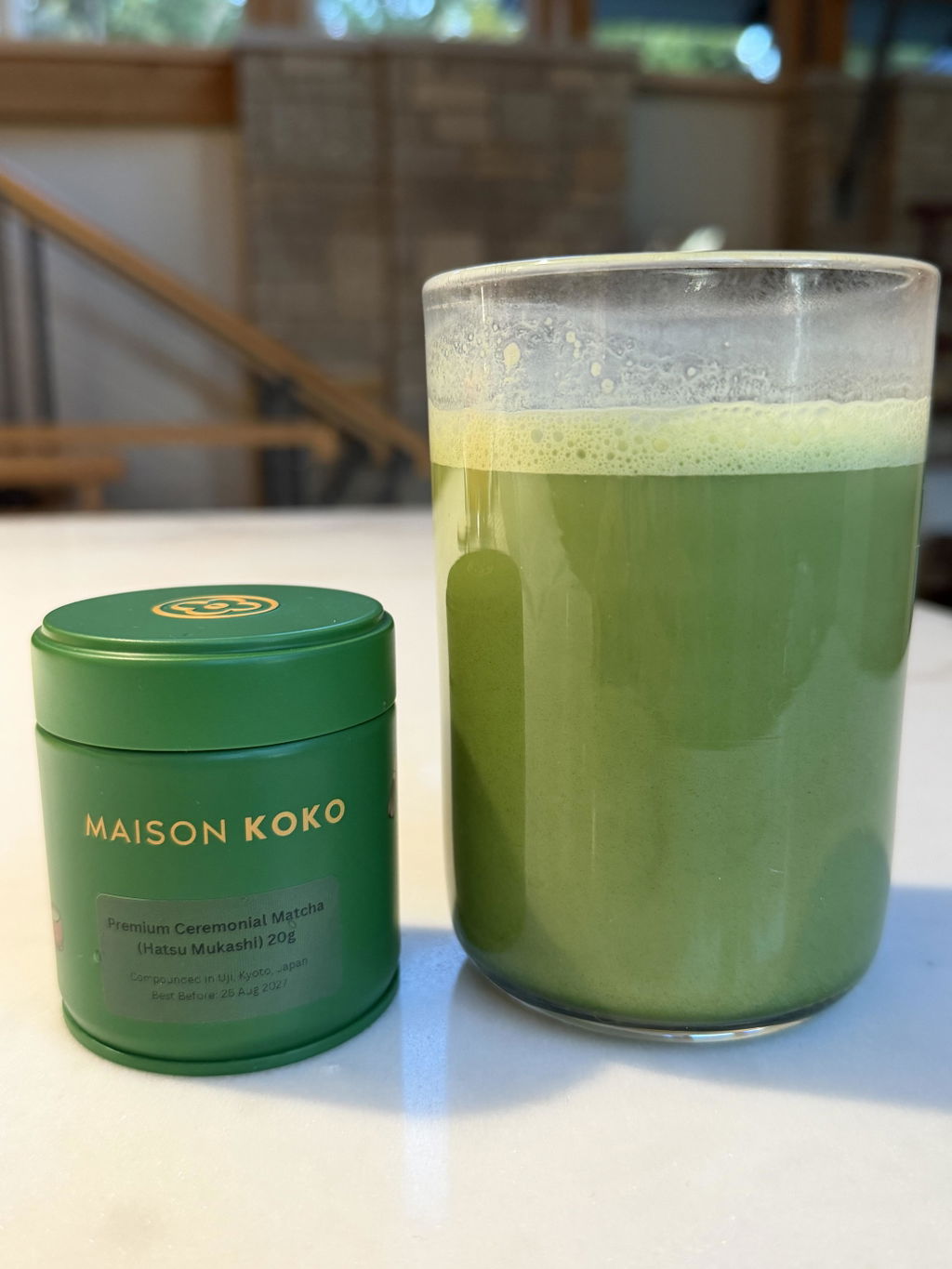
From vivid ube to vibrant ceremonial matcha, Maison Koko's specialty range is built for drinks that look as good as they taste. Layer them, pair them, and make something worth photographing.
Shop Specialty Powders