
Where to Buy Premium Matcha in Australia: A 2026 Buyer's Guide
Share
For genuine ceremonial matcha, buy from a specialist online retailer that sources from named Japanese farms and ships fresh, not from a supermarket. Specialist stores offer the widest range, the clearest origin information, and the freshest stock.
- Best option: specialist online stores with named-farm sourcing and a freshness guarantee.
- Fine for baking only: supermarkets and general grocers, mostly culinary grade.
- Expect to pay: roughly $40 to $45 for a 30g tin of everyday ceremonial, and $60 to $80 for premium or single-cultivar.
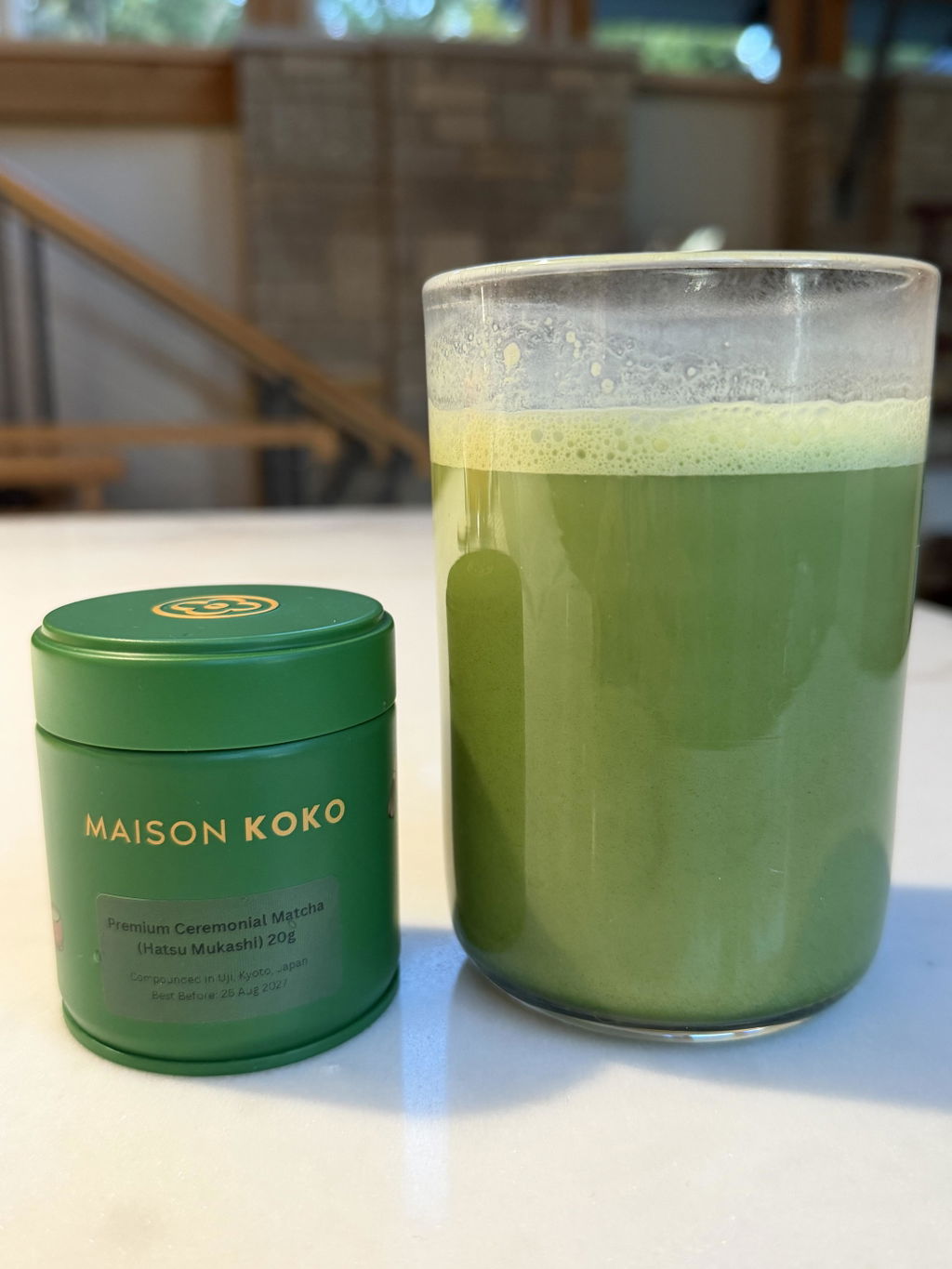
Maison Koko is an Australian specialist sourcing directly from Uji, Yame, Shizuoka, and Miyazaki, rated 4.8 out of 5 from 615 reviews. See where we fit.
Australia's matcha market has never had more choice, and never been more confusing to shop. Ceremonial-grade tins sit next to culinary powders under the same label, supermarket options promise more than they deliver, and the 2026 shortage has pushed prices up across the board. So where should you actually buy premium matcha in Australia, and how do you avoid overpaying for something that is not what it claims?
This is a practical purchasing guide: where to buy, what to pay, how to judge freshness, and how to match your choice to how you actually drink matcha. If you want a ranked comparison of specific brands instead, see our companion piece, Best Matcha Brands in Australia 2026.
There are four main ways to buy matcha in Australia. They are not equal, and the right one depends entirely on what you want the matcha for.
Dedicated matcha and Japanese tea specialists who source directly and ship nationwide. This is where genuine ceremonial matcha lives.
Physical specialty tea shops and some quality cafes sell matcha to take home. Excellent when you have a genuine specialist nearby.
Woolworths, Coles, Aldi, and general health-food aisles. Convenient, but a different category of product entirely.
General online marketplaces list a huge volume of matcha from many sellers, with wildly inconsistent quality.
For matcha you intend to drink, buy from a specialist online retailer or a genuine specialty tea shop. Save the supermarket for matcha you intend to bake with.
Because "ceremonial" and "premium" are unregulated terms, they tell you very little on their own. When you are deciding where to buy, these are the signals that actually separate premium matcha from marketing:
- Named origin. A specific region, ideally a farm, not just "product of Japan." Uji and Yame are the most prestigious regions.
- Stated grade and harvest. First-harvest, shade-grown, stone-milled, with a harvest date or freshness guarantee.
- Vivid colour. Genuine ceremonial matcha is brilliantly green. Dull or olive tones signal age or lower grade, though colour alone is not proof.
- Cultivar transparency. The best retailers name the cultivar, such as Okumidori or Samidori, because they know exactly what they are selling.
A retailer that gives you all of this is selling premium matcha. One that gives you none of it is selling a label. For the full breakdown of grades, colour, and cultivars, see our complete Matcha Buyer's Guide.
Price is one of the clearest signals of authenticity, especially in 2026. Genuine ceremonial matcha cannot be produced cheaply, and the ongoing 2026 matcha shortage has pushed costs up further. As a rough guide for what to expect in Australian dollars:
| Type | Typical price (AUD) | What it is for |
|---|---|---|
| Entry / premium grade | ~$20 for 50g (~$0.40/g) | Baking, smoothies, sweetened drinks |
| Everyday ceremonial | ~$40 to $45 per 30g tin | Daily drinking and lattes |
| Premium ceremonial | ~$60 to $80 per 30g | Straight drinking, best flavour |
| Single-cultivar & rare heritage | $75 to $4+ per gram | Connoisseurs, gifting, tasting |
Buying a larger pouch lowers the price per gram: an everyday ceremonial works out cheaper per cup in a 50g or 250g pouch than in a 30g tin, so if you drink matcha daily, the bigger sizes are the better value.
A 30g tin of genuine ceremonial matcha in Australia generally sits somewhere around $40 to $80. A tin labelled "ceremonial" for a fraction of that, especially during the 2026 shortage, is very unlikely to be the real thing. If the price looks too good to be true for genuine ceremonial matcha, it usually is.
This is where buying in Australia has a specific challenge: distance from Japan. Matcha is perishable and degrades once ground, so how a retailer handles freshness and shipping matters as much as where the leaf came from.
When buying in Australia, look for:
- A freshness guarantee or harvest date, so you are not buying stock that has sat for a year.
- Frequent restocking, ideally shipped by air rather than sea, which keeps the matcha closer to harvest-fresh.
- Protective packaging, such as nitrogen-sealed pouches or sealed tins that guard against light and air.
- Reasonable domestic delivery times, so the matcha reaches you quickly once dispatched within Australia.
A retailer holding long-shelf stock in a warm warehouse is selling a different, inferior product to the same matcha shipped fresh, even if the origin is identical. If your matcha ever tastes flat or harsh, freshness is often the reason, as our guide to why matcha tastes bitter explains.
The best matcha to buy depends on how you drink it. Match your purchase to your actual habit rather than just buying the most expensive tin.
Not sure which is right for you? The Matcha Buyer's Guide maps the entire range by flavour so you can find your match in about thirty seconds.
We are an Australian matcha specialist based on the Gold Coast, and we built the brand specifically to solve the problems this guide describes: unclear origin, stale stock, and relabeled grades.
Here is how we map to what this guide recommends looking for:
- Named-farm sourcing across four Japanese regions, Uji, Yame, Shizuoka, and Miyazaki, with no brokers in between.
- A freshness guarantee of no matcha older than 3 months from harvest, restocked regularly via air freight from Japan.
- The widest genuinely traceable range in Australia, from accessible everyday ceremonial to single-cultivar and rare heritage expressions.
- Australia-wide delivery from Australian stock, with fast domestic dispatch.
We are not the cheapest option, and we would not want to be, because genuine ceremonial matcha shipped fresh from named farms cannot be. What we offer is certainty about exactly what is in the tin.
Named-farm sourcing, a 3-month freshness guarantee, and the widest traceable range in Australia, rated 4.8 out of 5 from 615 reviews. Find your match and have it delivered fresh, Australia-wide.
Shop the Matcha Range